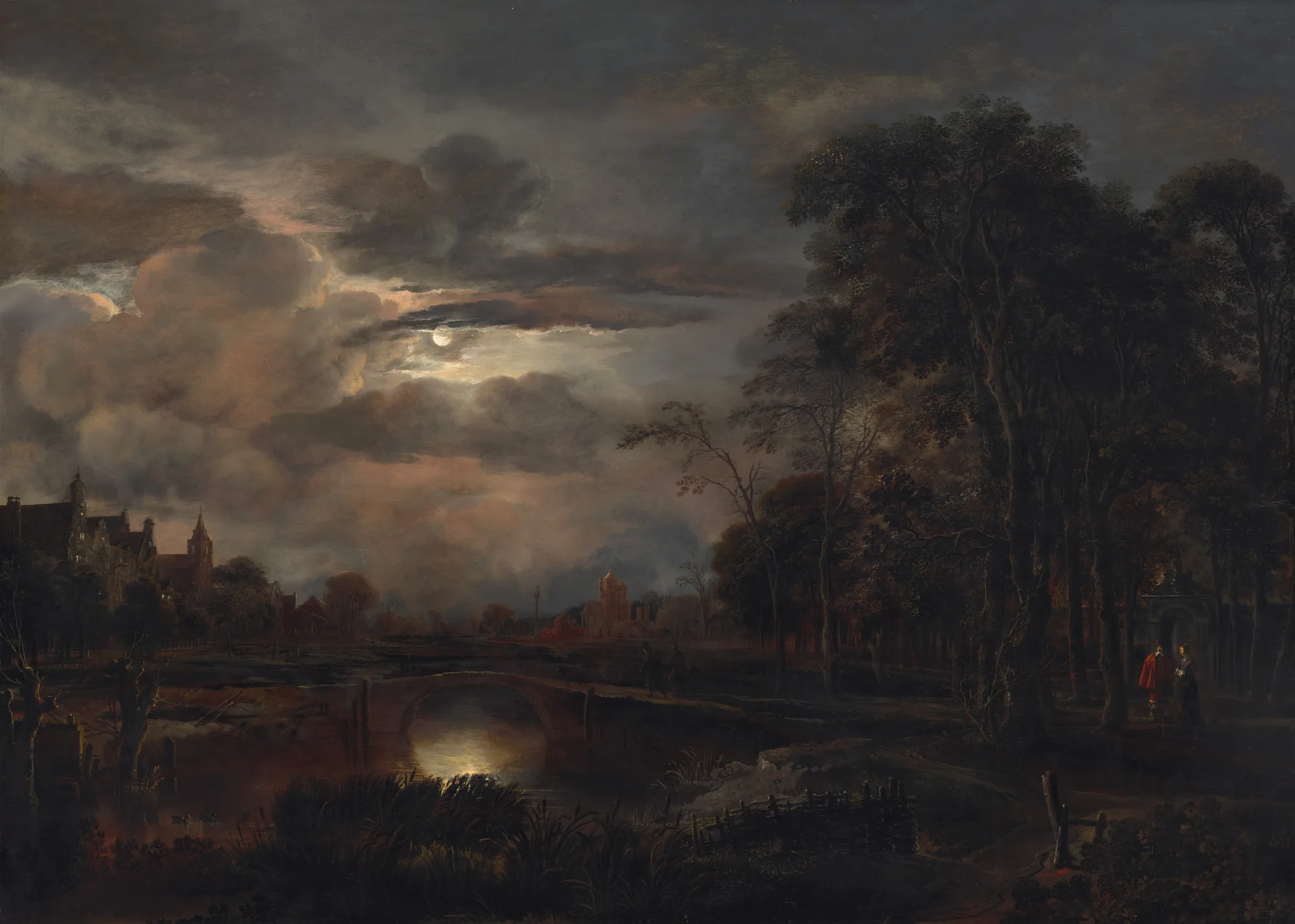
There is a park near my home.
In the middle of this park is a modest hill. If one lays down on the top of the hill, looking to the heavens, your visual field is left stranded in the deep blue.
I have started going out at night with my dog. He gets to run, and I gaze.
In our ever-quickening modern world, I wonder how often we look up at the sky. Aside from this recent curiosity, I really only take the opportunity when camping or deep in nature.
Its a shame really. Its most always there just waiting to be admired.
The sky is full and (mostly) untouched from human expansion. It remains clear and free from cement sidewalk and suburban sprawl. Until we fill the night sky with satellites, it even twinkles with distant planets and galaxies.
Humans Gazed Through History
I have a hunch, an intuition completely unfounded in any hard science. I think for millennia humans concluded their days staring into crackling fires or expansive night skies.
Now, many of us end our days staring into a neat little grid of LED’s, myself included.
What, if anything, have we lost?
I wonder if we wonder less.
I feel instinctual attraction to an open flame. And when camping, I can’t resist gazing up in awe.
I would wager these infinities are not being tapped into as often.
Not to sound like a Luddite (Wikipedia), but with every new piece of technology, I can’t help but think there are always trade-offs. The less obvious the exchange, the more insidious.
We humans can’t stand the tedium. We want everything to be seamless. Processed. Pre-digested ideally. Just give me the AI summary. A tiktok or YouTube short will suffice. We get our information from hyper-processed, cream-of-the-algorithmic-crop content.
Insights are not discovered, they are simply repeated.
Contemplation is now just an appearance.
Why meditate when we have Marcus Aurelius’ (Wikipedia) cheat sheet?
I’m not arguing against access to information.
I do think one of the treasures we traded for infinite knowledge was our considering gaze.